NIJ Body Armor Levels Explained: IIIA vs III+ vs IV
What Do Body Armor Levels Mean?
If you're shopping for body armor for the first time, the rating system can be confusing. You'll see Level IIIA, Level III, Level III+, and Level IV — but what do those actually mean, and which one do you need?
Body armor in the United States is rated according to the standards set by the National Institute of Justice (NIJ). The NIJ Standard defines exactly which threats each armor level must stop during testing. When you see a product described as "Tested to NIJ Standard," it means the armor has been evaluated against these specific ballistic benchmarks.
Level IIIA — Handgun Protection
Level IIIA is the highest rating for soft armor — the flexible, lightweight panels used in concealable vests and bulletproof undershirts. This level stops all common handgun rounds, including:
- 9mm
- .357 Magnum
- .44 Magnum
- .45 ACP
Level IIIA is the most popular choice for everyday concealed protection because the panels are thin, lightweight, and comfortable enough to wear under a regular shirt. A typical Level IIIA panel weighs around 1 lb, and a complete concealed bulletproof undershirt weighs roughly 3.5 lbs total.
Best for: Everyday wear, civilians, off-duty professionals, rideshare drivers, business owners, anyone who wants discreet protection without the bulk of a tactical vest.
Level III — Rifle Protection (Standard)
Level III armor is a significant step up from IIIA. These are hard armor plates — rigid panels made from materials like ultra-high-molecular-weight polyethylene (UHMWPE). Level III stops most common rifle rounds, including:
- 7.62x51mm NATO (.308 Winchester)
- 5.56x45mm NATO
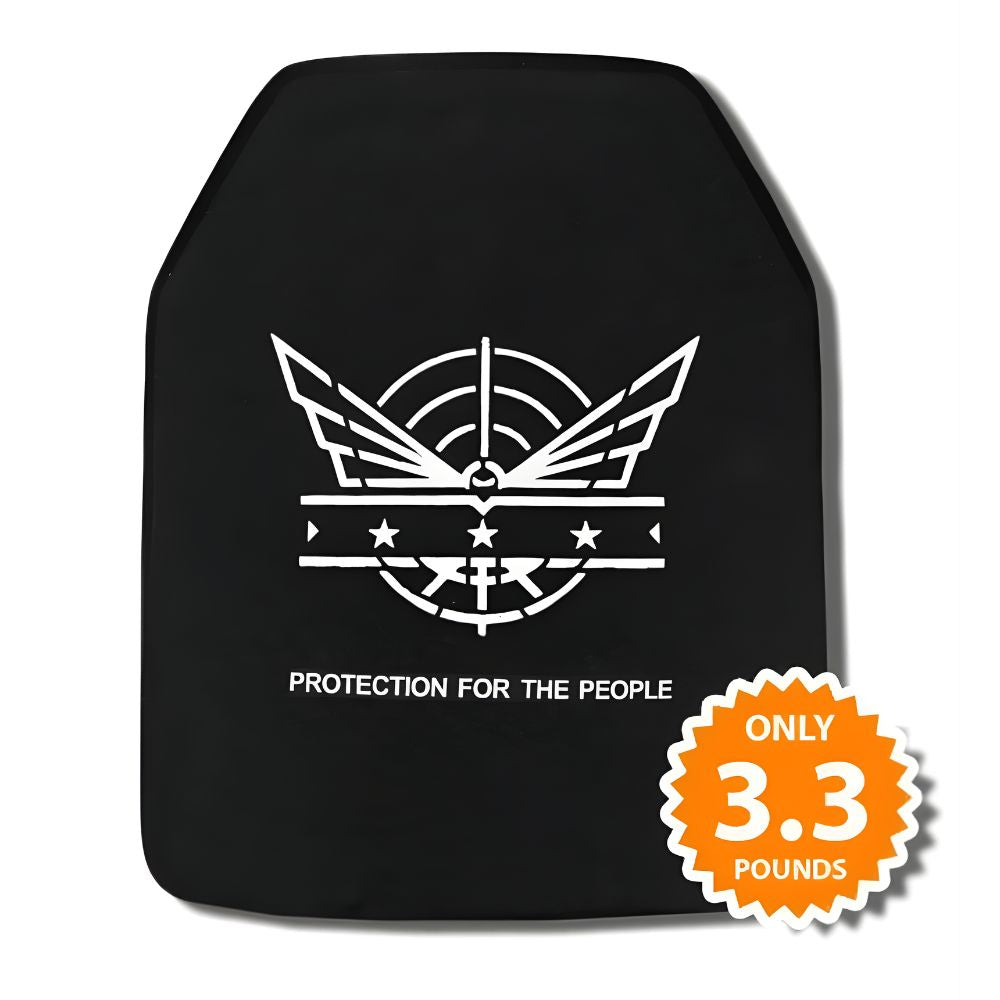
Level III plates are heavier than soft armor — typically 3 to 5 lbs per plate — but they provide protection against threats that soft armor simply cannot stop. They're designed to be used in plate carriers, not worn directly against the body.
Best for: Home defense, range use, security professionals, anyone who needs rifle-rated protection and doesn't mind the added weight.
Level III+ — Enhanced Rifle Protection
Level III+ is not an official NIJ designation — it's an industry term used to describe plates that exceed Level III performance. Specifically, Level III+ plates are typically tested against additional threats that standard Level III may not cover, such as:
- M855 "Green Tip" 5.56 (steel penetrator)
- M80 7.62x51mm
- 7.62x54R (light ball)
The best Level III+ plates use silicon carbide bonded to UHMWPE, which provides this enhanced protection at a surprisingly low weight. For example, a Level III+ silicon carbide plate can weigh as little as 3.9 lbs while stopping rifle rounds that would defeat a standard Level III plate.
Best for: Anyone who wants rifle protection but needs to keep weight down. The sweet spot between protection level and portability.
Level IV — Maximum Protection
Level IV is the highest NIJ Standard rating. These plates stop armor-piercing rifle rounds, including the .30-06 M2 AP — a round specifically designed to penetrate armor. Level IV plates are typically made from silicon carbide or ceramic composites backed with UHMWPE.
A Level IV armor plate typically weighs around 5.5 lbs per plate. That's heavier than Level III+, but it's the only rating that guarantees protection against armor-piercing threats.
Best for: Military, law enforcement, high-threat environments, or anyone who wants the absolute maximum protection available regardless of weight.
Quick Comparison
| Level | Stops | Type | Typical Weight | Best For |
|---|---|---|---|---|
| IIIA | All handguns up to .44 Mag | Soft armor | 1–1.5 lbs/panel | Everyday concealed wear |
| III | Common rifle rounds (7.62, 5.56) | Hard plate | 3–5 lbs/plate | Home defense, tactical |
| III+ | Enhanced rifle (M855, 7.62x54R) | Hard plate | 3.5–4.5 lbs/plate | Best weight-to-protection ratio |
| IV | Armor-piercing (.30-06 AP) | Hard plate | 5–6 lbs/plate | Maximum threat protection |
Which Level Do You Need?
The right armor level depends on what threats you're most likely to face:
If your primary concern is personal safety in daily life — commuting, working, traveling — then Level IIIA concealed armor gives you proven handgun protection that you can wear comfortably all day without anyone knowing.
If you need rifle protection for home defense or professional use, Level III+ offers the best balance of protection and weight. You get coverage against most rifle threats at roughly 4 lbs per plate.
If you need armor-piercing protection or simply want the highest level available, Level IV is the only choice.
Many of our customers start with a Level IIIA bulletproof undershirt for everyday protection and add a plate carrier bundle with Level III+ or IV plates for situations that call for more coverage.
A Note on "NIJ Certified" vs. "Tested to NIJ Standard"
You may see some brands claim their products are "NIJ Certified." It's important to understand that the NIJ sets testing standards, and armor is tested against those standards by independent ballistic laboratories. At Level 4 Armor, all of our products are Tested to NIJ Standard — meaning they've been evaluated against the specific ballistic criteria the NIJ defines for each protection level. Every panel we sell also comes with a 10-year panel warranty, the longest in the industry.
Have questions about which armor level is right for you? Contact us — we're happy to help.